
Meet the 2024-2025 Heritage Arts Apprenticeship Pairs
July 16, 2024
From artists preserving Indian classical dances to Mississippi guitar picking styles and more, The Center for Washington Cultural Traditions is excited to announce the new apprenticeship pairs for the 2023-2024 Heritage Arts Apprenticeship Program.
Created to preserve traditional arts, crafts, or skills, the Heritage Arts Apprenticeship Program (HAAP) helps carry on cultural traditions important to Washington’s communities. A skilled master artist will mentor their apprentice for at least 100 hours of one-on-one time throughout the program year. Now entering its seventh year, over 130 people have participated in the program.
“The HAAP program is vital because it really meets traditional artists where they live, and allows them to practice and teach as they want, where they want, and with whom they want,” said Thomas Grant Richardson, director of the Center for Washington Cultural Traditions. “Folklife is about understanding cultural traditions in context, but often arts programing has to decontextualize those traditions to present them elsewhere. The HAAP program allows traditional arts to thrive where they already live.”
Folk and traditional arts practices are often learned informally in one-on-one settings. and mMany practitioners lack the resources and networks to pass on their skills. Because of this,, and as a result, many traditions are at risk of being lost. In addition to both preserving traditional skills and generating income for the practitioners, the program also helps apprentices develop important leadership skills that will help them advocate for their communities.
Many who have been part of the Heritage Arts Apprenticeship Program use their experience to create businesses centered on their traditional products, or better establish themselves as teaching artists or paid performers. But most importantly, folk and traditional artists and practices provide meaningful ways for people to connect with their past, and to build bridges to other communities in the present.
Program participants may teach or study music, visual art, occupational arts, dance, culinary traditions, storytelling and other verbal arts, and much more.
Check out information about participants, their traditions, and their progress throughout the year at waculture.org. The Heritage Arts Apprenticeship Program will culminate in a free event to introduce the public to these unique cultural traditions, date and time to be announced.
The Center for Washington Cultural Traditions is managed through a partnership between ArtsWA and Humanities Washington.
Meet the 165 teams of artists and culture bearers chosen to help preserve traditional skills across Washington State:
Tradition: American folk music and Mississippi Delta blues fingerstyle guitar
Master Artist: Rachel Harrington, Vancouver
Apprentice: Jacob Saunders, Vancouver
This team will focus on Mississippi Delta African American guitar picking, Scots/Irish storytelling of Appalachia, and Tex-Mex troubadour tradition.
Tradition: Aztec Fire Keeper dancing
Master Artist: Araceli Jaime, Seattle
Apprentice: Karol Alaniz, Auburn
The fire keeper has many responsibilities within the Aztec dance group, including building the altar and practicing traditional healing and cleansing.
Tradition: Ballet Folklórico
Master Artist: Emilie Jimenez, Cheney
Apprentice: Diana Corral Torres, Wenatchee
This team will focus on learning footwork and skirt work for traditional Mexican dances from Jalisco, Sinaloa, Veracruz, and Michoacán.
Tradition: Lutherie (instrument repair)
Master Artist: Devin Champlin, Bellingham
Apprentice: Mariah Roberson, Seattle
This team will focus on the more difficult skills needed to assess, repair, restore, and maintain stringed musical instruments, particularly guitars, banjos, and mandolins.
Tradition: Majolica Tableware
Master Artist: Ann Marie DeCollibus, Ferndale
Apprentice: Jessica Gigot, Bow
This project will focus on creating uniquely decorated, hand-crafted tableware using the Majolica tradition in a modern, rural context. The team will tell the story of how food is grown and gathered using original imagery and surface design techniques.
Tradition: Mohiniyattam Indian classical dance
Master Artist: Anu Samrat, Bellevue
Apprentice: Elaine Varghese, Duvall
The apprentice will build on her knowledge of Mohiniyattam, a classical Indian dance form characterized by soft, flowy movements. Mohiniyattam was danced to sopana sangitam, devotional music sung in temples.
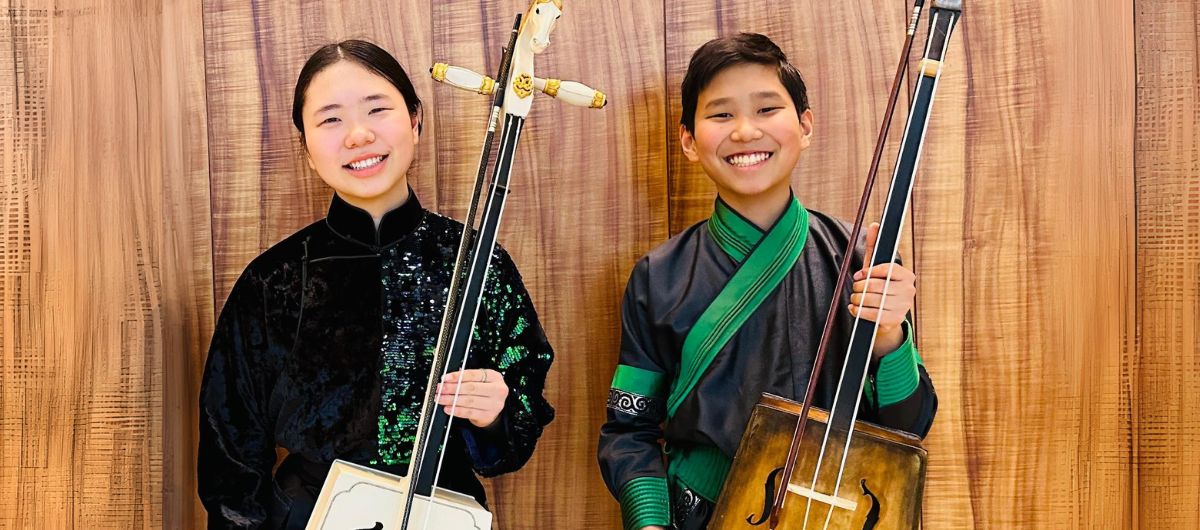
Tradition: Mongolian Horse Head Fiddle
Master Artist: Anu-Ujin Batbaatar, Mercer Island
Apprentice: Temuujin Batbaatar, Mercer Island
This team will explore the rich history and technique of the Morin Khuur, an iconic Mongolian instrument. The apprentice will learn traditional melodies, bowing techniques, and ornamentation styles.
Tradition: Peruvian Retablos (dioramas)
Master Artist: Fresia Valdivia, Lynnwood
Apprentices: Magaly Bailon, Lynwood and Natalia Oblitas, Lynwood
Dioramas tell the story of Peruvian history in miniature, foster artistic expression, and pass down cultural heritage. The apprentices will craft scenes of daily life with handmade and hand-painted figures.
Tradition: Quileute Basketweaving
Master Artist: Catherine Salazar, Forks
Apprentice: Gloria Salazar, Forks
This team will learn how to prepare raw cedar to create necklaces, woven baskets, hats, and headbands.
Tradition: Black Quilting
Master Artist: Brenetta Ward, Seattle
Apprentice: JeLisa Marshall, Seattle
Quilting is a beloved tradition in many cultures, but it is especially significant to Black culture in the United States. Enslaved people used quilting to maintain familial roots to Africa. This project will focus on techniques developed by Black quilters and the team will collaboratively complete a community-based, cultural story cloth.
Tradition: Rabindranritya (Tagore Indian Dance)
Master Artist: Piyali Biswas De, Sammamish
Apprentice: Tonoya Biswas, Sammamish
Rabindranritya is a unique Indian dance developed by Rabindranath Tagore, the first non-European Nobel literature laureate. It blends elements of classical-folk dances and uses graceful movements and poetic gestures to express emotions.
Tradition: Son Jarocho Zapateado dance
Master Artist: Yesenia Hunter, Yakima
Apprentice: “A” Israel Aeden Hunter, Yakima
Zapateado jarocho is the percussive dance steps that accompany of the music of son jarocho, a regional folk music style from Veracruz, Mexico.
Tradition: Suquamish dyeing weaving and music and dance preservation
Master Artist: Peg Deam, Suquamish
Apprentice: Kyles Gemmell, Poulsbo
This team will build on design and traditional dyeing skills used in weaving cedar and wool as well as making regalia. This multifaceted project includes making regalia, basketry, making wool and cedar designs, and learning about traditional dyeing methods. Their project will also include learning songs and dances to pass on to future Suquamish generations.
Tradition: Chinese Porcelain Enamel Processes
Master Artist: Cheryll Leo-Gwin, Redmond
Apprentices: Amy McBride, Tacoma and Oliver McBride Youngers, Tacoma
This team will focus on the traditional Chinese porcelain enamel process. CloIisonné enamel appeared in China in 1400 and became a main category of China’s decorative arts for furnishing temples and palaces. Copied by artisans, objects were story- and myth-bearing vessels to be handed down to future generations.
Tradition: Native Cedar Weaving
Master Artist: Donna McNeil, Eastsound
Apprentices: Sia Aronica, Ellensburg and Janine Bufi, Ellensburg
This project will focus on gathering cedar tree materials and processing them using traditional skills/techniques to create finished, usable items.
Tradition: Ravenstail Weaving
Master Artist: Janice Jainga-Lonergan, Seattle
Apprentices: Dawn Davis, Milton and Ashley Schmidt, Everett
This team will learn to weave wool in the Ravenstail style and carry-on ancestral knowledge they can also teach others.