
The Menagerie
A short story.
It’s been five years since I’ve laid eyes on the house I grew up in, or on The Menagerie, which I always considered my second home. Father had Svetlana make my favorite dish, and he pours me a glass of wine I know he can no longer afford. He’s trying to put me in a good mood before my visit to The Menagerie, and it worries me, what I might find there. I know what the papers have said over the past few years. But for now I choose to enjoy the meal and the wine, and I marvel at how good the kitchen looks, how well it was finally restored. You’d never guess there was a fire here.
Once we finish lunch, Father offers me his arm to walk over to The Menagerie. He looks like the one who needs an arm to hold on to — he shakes at each step — but I accept his arm, trying to remember a youthful Father escorting Princess Isabella from room to room of The Menagerie like he was royalty himself.
As we walk up the winding driveway, I see the once perfectly tended grounds are now overgrown with weeds. A knot tightens in my chest. I don’t want to see what this place has become.
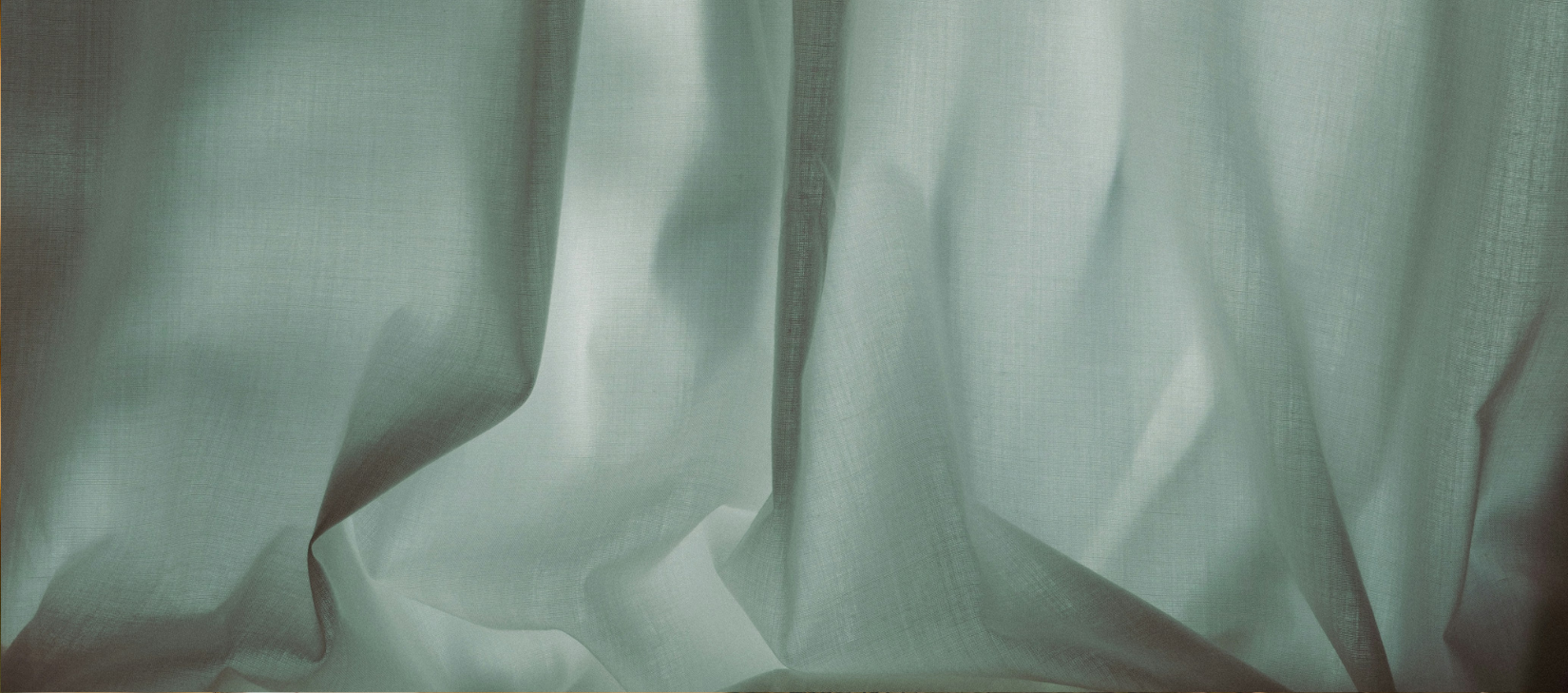
It’s dark in the first exhibit room. The grime covering the windows blocks out the sunlight. Mother said our specimens’ moods and health benefit from natural light, so each exhibit room was built with huge windows. An undertaking to keep clean, but they were always clean, under Mother’s care. We approach the cage, the curtains draped across it. Guests are — well, were — invited to pull the rope to make the curtains part, and as people who rarely do anything for themselves, they enjoyed it.
“Please, have the honor,” Father says, as I’ve heard him say countless times. There’s no joke to his voice; he’s really acting like I’m a guest. How long has it been since he’s entertained a guest? Two, three years. Yet, Svetlana told me, each day he dresses in a suit and tie, what little hair he has left slicked back, a rose in his lapel. Looking at the rope I remember Princess Isabella’s first visit, when I was around six years old. She was in her 30s but girlish in her demeanor, laughing with delight as she got to tug on the rope to reveal the first exhibit. As I grab hold of the rope I can feel the dust on my fingers; I can see it layered on the curtain fabric. I picture the residue it would leave on Isabella’s white gloves.
Father is beaming at me. To him I might as well still be that six-year-old he proudly showed off as part of the family business. We were specimens too, Mother would say, the three of us; we were part of the show. I tug at the rope, and the curtains part. I’m relieved to find the first cage contains Lemarce, as it has for years. But my relief changes quickly. The cage is filthy, there’s a huge spider web in one corner, and the rug is threadbare and stained in several places. Lemarce is sitting on the floor staring straight ahead, unbathed, his beard several inches long. He isn’t wheeling himself around the room in his special chair. He used to impress guests with his dexterity; they would clap at his energy, his good humor, despite deformed hands and stumps for legs. Now, something in the air around him tells me he spends most of his time just sitting there.
The chair hunches in the corner, dusty.
“When is Marcia in next?” I say, a hint to Father that Lemarce needs attention.
“I had to let her go. She was making too many demands, saying she needed more resources. You know,” he says, as if Marcia was always unreasonable, when I know she wasn’t.
“You didn’t fire Albert, too?” I’m suddenly a bit panicked. Albert tends to the last exhibit. “No, rest assured. Albert still has his job.”
Relieved, I turn back to Lemarce, only to remember how little there is to be relieved about. I now see the stains on the rug are from Lemarce soiling it. Perhaps he had no choice because the slop pail was full, and the thought makes me cringe. I walk up to the glass. I hope if I catch Lemarce’s eye he will recognize me and it will create some spark in him. When he doesn’t look up, I squat down so our eyes are at the same level. He used to get excited when I’d approach; he would wheel himself close to the glass and show me whatever new trinket Mother had found him. Now, the basket that held the toys is gone.
“What happened to all of Lemarce’s toys?”
“He didn’t seem to want them anymore. He broke them, threw them at the walls.”
Lemarce won’t look at me. There’s no reason to close the curtains but I do anyway, thinking the view of the fabric is kinder than the giant dirty windows.
In the corridor hangs the portraits of my grandparents, filmed over with dust. They created The Menagerie: they opened with a mere three specimens in simple wire cages, their son the tour guide, and a young go-getter their all-around helper. The go-getter was Mother. Together, my parents — mostly Mother — transformed the low-budget zoo into a world-class attraction accessible only to the .01 percent. “Perhaps no other single attraction has ever had so many members of the elite clamoring for their turn,” said my favorite-ever profile of us, in Vanity Fair.
Image via Unsplash
The next specimen is Sagoraya. When I last saw her she was a child clutching a doll, wearing that specially-made frock. When I part the curtains they reveal her standing in the middle of the room. The change is startling, from the child I remember to an almost woman; but even more startling, she is naked. I’m mortified, especially with Father a foot away. I’m also unexpectedly repulsed by what should be a familiar sight: the head of Sagoraya’s never-quite-formed twin poking out of her neck. Many of our guests enjoyed touching Sagoraya’s appendage through a window in the cage. As a reward for her agreeability, Father would then dispense a biscuit to her through a lever. She would devour it, crumbs flying everywhere, and our guests enjoyed that too. Sagoraya looks right at us, then she puts her hands between her legs. I grab at the rope to pull the curtains closed, but not before I’ve seen the look of recognition on her face. I wrap my arms around my chest, my skin crawling.
I want to believe I’m the only one who has seen this spectacle, but I know it probably isn’t true. How proud I used to be of what my parents built. That they turned my grandparents’ idea into a first-rate attraction. How ashamed I am now of what father has allowed it to become; how ashamed I am of him, an old man, his suit and grooming now making him look like a chauffeur. Worse yet is his manner, jaunty, ever the proud impresario, when the only audience he has left is me.
When care of The Menagerie was first solely left to Father, I knew he couldn’t run the place as Mother had, but I believed he would generally keep things on track. For a brief time after Mother’s accident, I visited often; but my life took me in other directions. What did mother say to me, once, years before? A strange moment of candor; I can’t recall another time that she spoke of Father’s shortcomings. “If it had been up to him, he’d have put the specimens in barn stalls and charged $5 admission.” I share some of the blame. If I’d agreed to come home and run The Menagerie with him, I could have tempered his worst instincts. It was so unexpected, mother’s accident; I couldn’t abandon the independence I’d carved out for myself. I’ll come back eventually, I told Father at the time.
“Let’s skip to the end,” I say.
“Of course, whatever you prefer.”
***
Mother lies in the same bed I remember. It appears a bit sunken in the middle although still in respectable shape, thankfully. The bed coverings, of fine white silk, look grayish now. Her upper half is uncovered and elevated for a clear view. They tell us she has almost no brain function, but I fear the worst, as impossible as it is – that she knows.
As if he’s heard my thoughts and wants to counter them, Father says, “She’d be so proud, knowing how we’ve kept going without her.”
So much equipment to keep her alive. It takes up most of the cage.
“I think it’s time to take her home,” I say.
He twitches. “This is what she would want.”
I can’t disagree. The three of us were specimens ourselves, Mother always said.
“You’re just feeling sentimental,” Father says. There’s a hurt note in his voice.
“I could return.” Words said before realizing I formed the thought.
“Yes, you could. Svetlana would love someone else to cook for. And if you could visit the specimens regularly, it would make a difference. They were always happy to see you.” As he gets excited, his voice gets higher. “We could open to the general public — maybe that’s the next phase. Your mother was always insistent that only the very best should experience The Menagerie, but she also understood adapting. Why couldn’t we let more people in?”
I don’t think he wants an answer, so I don’t give him one.
We never opened Mother’s cage for guests to touch her. But there was one time. I’d returned home to visit, my stay coinciding with a visit from Isabella. When Isabella pulled the curtains on Mother’s cage, tears engulfed her eyes and she turned away. She dabbed at her face with the handkerchief Father immediately handed her, then turned back to look at Mother. A quick dart of a glance at first, as if the glance itself would sear her eyes. I couldn’t blame her; Mother was now a mess of scar tissue in human shape. I thought we perhaps should move Isabella along for her own sake. Then she said, “May I get closer?”
Without hesitation Father typed in the code — Mother’s cage locked like the rest, although for no reason — and the glass slid open. Isabella approached Mother slowly as if she were a feral animal. She took off a white glove and smoothed her bare hand over Mother’s flesh. I could see the goosebumps form on her own, perfect skin. She made a strange noise like a coo. Then again.
“I think we should let Mother rest,” I said absurdly. I grabbed Isabella’s arm — the soft fleshy part where she would most feel my fingernails — and pulled her away.
Outside the cage, Father reached for Isabella’s hand. “Danae hasn’t gotten used to losing her mother.” Father looked at me expectantly. I glared back at him. He said, “Apologize, Danae.”
I expected a scene and knew I deserved it, but Isabella said only, “Let her be.” Relieved, father quickly ushered her to the lobby where her people waited, as our guests’ people always did. They were never allowed the privilege of going past the lobby. Of course, they never wanted it.
Now Father says, “I’m so glad you’ve had this idea. I knew you’d return one day.”
I turn to look at him and know I’m looking at him for the first time since I arrived, because every other second he’s been playing a part. The pity I feel for him claws at me as much as looking at Mother’s destroyed body does.
I turn away, reach for the rope, and cover Mother up.
Originally from Michigan, Naghma writes fiction and makes jewelry. “The Menagerie” is the winner of Folio: The Seattle Athenaeum’s annual short story writing competition, presented by the NEA’s Big Read program.